


If you've ever felt drawn to the serpent imagery in spiritual traditions, or wondered about the ancient wisdom that flows through Haitian Vodou, you're about to meet one of the most revered spirits in the entire pantheon. Damballa Wedo isn't just another lwa: he's the primordial creator, the cosmic architect who shaped our universe with his sacred coils.
Let's dive deep into understanding this powerful spirit and what his presence means for those walking the Vodou path.
Who Is Damballa Wedo?
Damballa Wedo (also spelled Damballah, Dambala, or Danbala in Haitian Creole) stands as the great white serpent of creation, one of the most ancient and powerful lwa in both Haitian Vodou and West African Vodun traditions. His name carries the essence of his origin: Wedo refers to the sacred city of Whydah (modern-day Ouidah) in Benin, connecting him directly to his African roots.
Picture this: before anything existed, there was Damballa. He's either the very first lwa created by Bondye (the supreme God) or the divine force through whom all creation flowed. This isn't just spiritual poetry: it's the foundation of Vodou cosmology.
When Damballa manifests, he appears as a massive serpent, sometimes white, sometimes black, and occasionally as a brilliant rainbow stretching across the sky. But here's what makes him truly unique among the lwa: Damballa doesn't speak when he possesses someone during ceremony. Instead, he communicates through whistling sounds and gentle hissing, embodying the ancient wisdom that transcends human language.

The Cosmic Creator at Work
Ready to understand how your world came to be? Damballa used his seven thousand coils to weave the very fabric of existence. Every star twinkling in the night sky, every planet orbiting in space: all shaped by his serpentine dance through the cosmos. But he didn't stop there.
Those hills you love to climb, those valleys that take your breath away? Damballa carved them into existence with the movement of his powerful body across the earth. And here's where it gets truly beautiful: when Damballa shed his serpent skin, he created all the waters on Earth. Every ocean wave, every river flowing to the sea, every drop of rain that nourishes your garden: all born from this sacred act of transformation.
This isn't creation through destruction or violence. This is creation through renewal, through the natural cycle of shedding the old to birth the new. Are you starting to see why serpent symbolism is so powerful in spiritual traditions worldwide?
Ayida-Wedo: The Divine Partnership
Damballa didn't create alone. His beloved partner, Ayida-Wedo, the Rainbow Serpent, worked alongside him as the divine feminine principle in creation. Together, they represent the Vodou understanding that true power comes through balanced partnership: masculine and feminine energies working in perfect harmony.
When you see rainbow imagery in Vodou art, or when practitioners speak of the intertwined serpents, they're honoring this cosmic couple who embody growth, positive change, and the cyclical nature of all existence. Think of them as the ultimate power couple of the spirit world: ancient, wise, and deeply connected to the rhythms of life and death.
What Damballa Means to Vodouisant
If you're a practitioner of Vodou, or even just spiritually curious, understanding Damballa's significance is crucial. He's what we call a "Leading Spirit of Vodou": meaning every single practitioner, regardless of their personal spiritual court, must pay respects to him. This universal reverence isn't just tradition; it's recognition of his fundamental role in the entire spiritual ecosystem.
But here's what you need to know about working with Damballa: he demands spiritual purity. This isn't about being perfect: it's about approaching him with genuine respect and intention. During ceremonies, no smoking, no drinking until he's properly acknowledged. He's the grandfather of all lwa, and like any respected elder, he expects proper protocol.

For many practitioners, Damballa represents several powerful concepts simultaneously. He's the Ouroboros: the serpent eating its own tail, symbolizing the eternal cycle of beginning and end, alpha and omega. He's also connected to the Caduceus, that staff with intertwined serpents you see in medical symbols, highlighting his role as a divine healer.
When Damballa dances across the sky as a rainbow, he's not just beautiful to behold: he's signaling atmospheric changes, transformations coming to your life, shifts in energy that you need to prepare for.
Ceremony and Sacred Practice
Wondering how to honor Damballa properly? His ceremonial requirements are specific but not complicated. White is his sacred color: white eggs, white flour for drawing his veve (sacred symbol), pure milk, and quality rum. These aren't random offerings; they reflect his association with purity, wisdom, and the life-giving force of creation.
Due to his syncretism with Saint Patrick of Ireland and Moses from Judeo-Christian tradition, many Vodouisant celebrate Damballa around Saint Patrick's Day. This blending isn't cultural appropriation: it's the beautiful, complex result of African spiritual traditions adapting and surviving through centuries of oppression and cultural exchange.
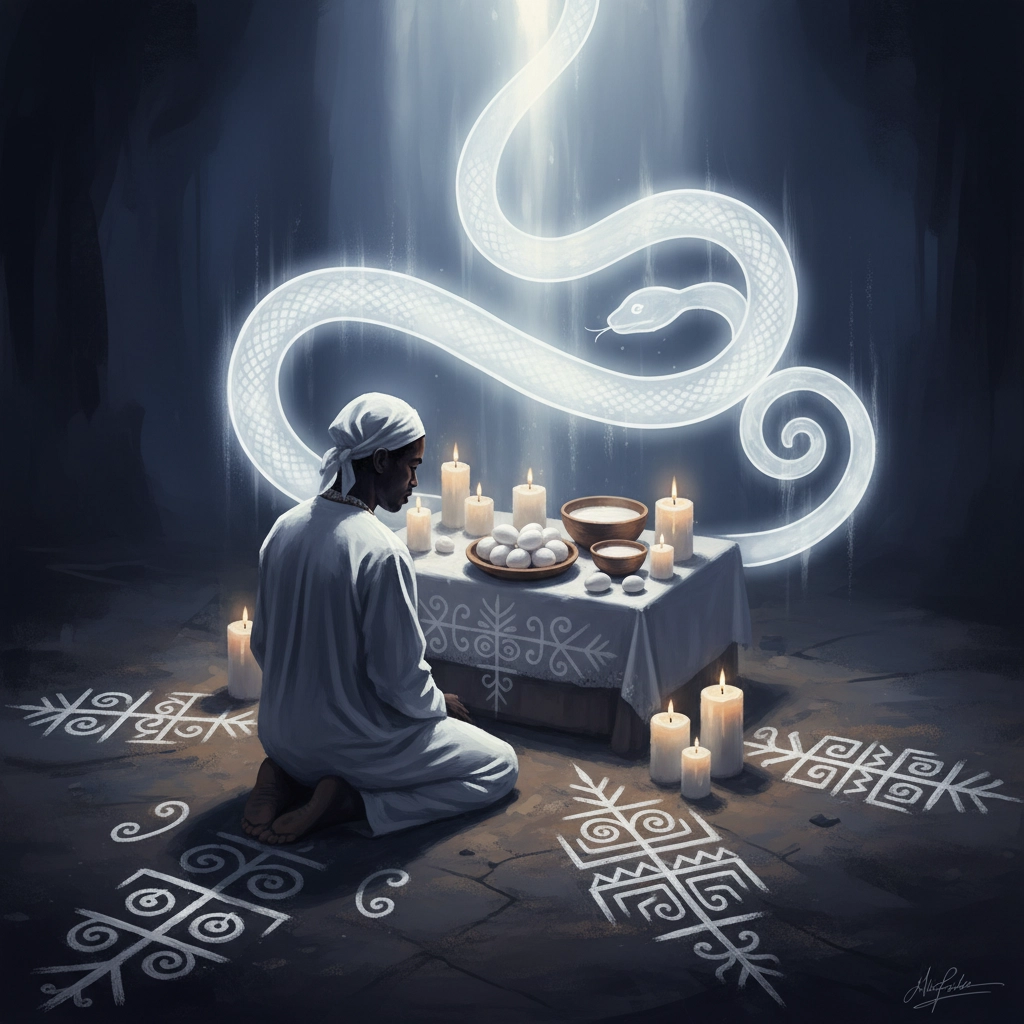
During possession, when Damballa mounts a devotee, the experience is unlike any other lwa. The person moves with serpentine grace, often slithering across the ground, communicating only through whistles and hisses. Some might see this and think it's primitive, but practitioners know they're witnessing pure, ancient wisdom expressing itself through human form.
The Healer and Transformer
Here's what many people don't understand about Damballa: he's not just an ancient creator deity sitting back and watching the world turn. He's an active force for healing and transformation in practitioners' lives. When you're stuck, when you need genuine change, when you're ready to shed old patterns that no longer serve you: Damballa can bring about that magical newness you're craving.
Think about it: if he created the entire universe, what do you think he can do with whatever situation you're facing? But remember, his energy works through natural cycles. Just like a serpent can't shed its skin whenever it wants, transformation through Damballa requires patience, proper timing, and respect for the process.
Living Wisdom in Modern Times
Are you wondering how an ancient serpent spirit relates to your contemporary spiritual practice? Damballa's teachings are more relevant than ever. In a world obsessed with quick fixes and instant gratification, he reminds us that true transformation takes time. Real wisdom comes through cycles of growth, shedding, and renewal.
His emphasis on purity isn't about perfection: it's about intention. When you approach your spiritual practice with genuine respect, when you honor the traditions that came before you, when you recognize the sacred in the everyday, you're walking in Damballa's energy.
The serpent doesn't apologize for shedding its skin, and Damballa doesn't apologize for requiring respect. This is powerful medicine for anyone struggling with boundaries, self-worth, or the courage to transform their life.
Connecting with the Ancient Wisdom
Ready to deepen your understanding of Vodou traditions? Whether you're called to work directly with Damballa or simply want to honor the wisdom he represents, remember that authentic spiritual practice requires education, respect, and often proper initiation.
The serpent path isn't for everyone, but for those called to it, Damballa offers profound healing, ancient wisdom, and the power to transform your life through cycles of conscious renewal. Just remember: approach with respect, maintain your spiritual purity, and be ready for real change, not just surface-level shifting.
The great serpent is still dancing through the cosmos, still creating, still available to those who approach him with genuine reverence and authentic spiritual intent.
