

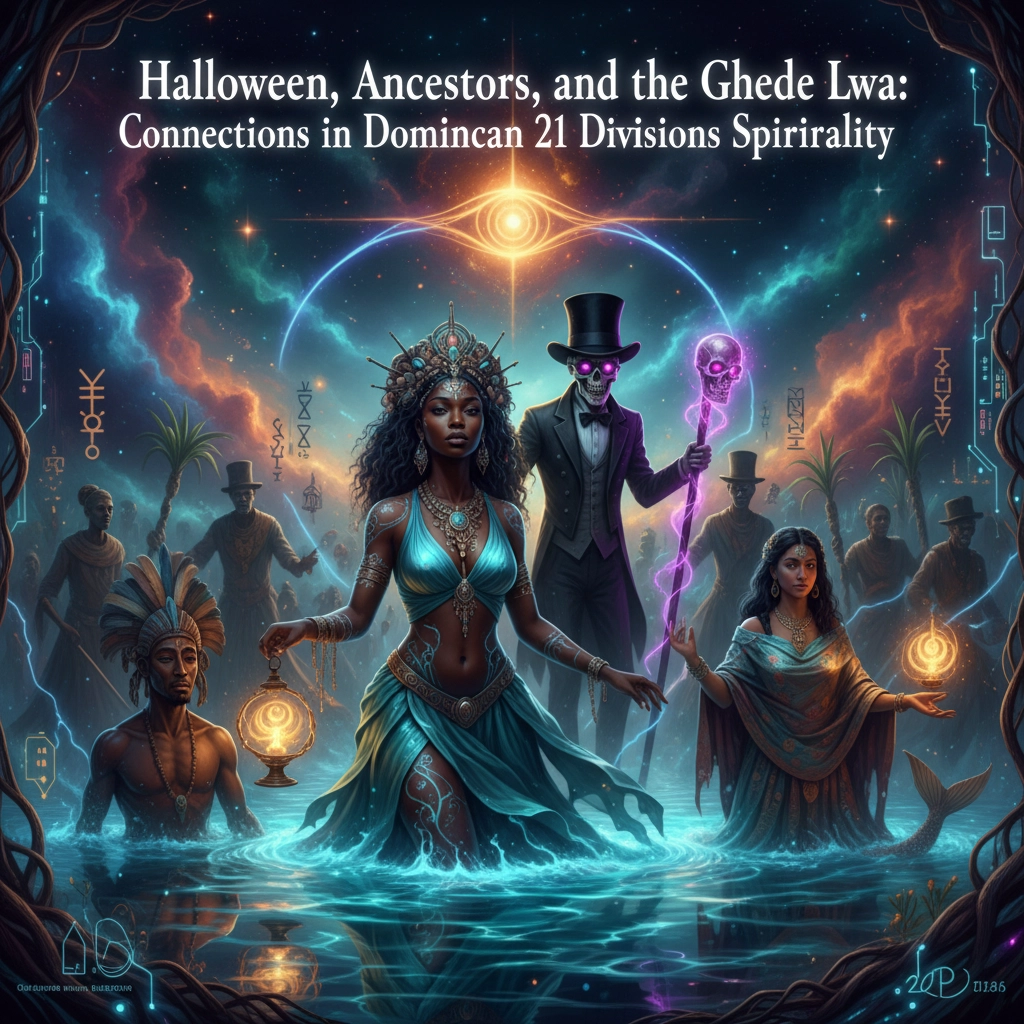
Ever wonder why Halloween feels spiritually charged? You're not imagining things. October 31st sits at that thin veil moment when many traditions recognize the closeness between the living and the dead. And if you've been drawn to understand how Dominican 21 Divisions spirituality approaches this sacred time, you're in for something beautiful and profound.
Let's talk about the Ghede Lwa, ancestor veneration, and how Halloween connects to one of the Caribbean's most fascinating spiritual traditions. Ready to dive deep into the mysteries?
Understanding the 21 Divisions Foundation
The Dominican 21 Divisions – Las 21 Divisiones – isn't just another spiritual system you read about online. This is a living, breathing tradition that emerged from the beautiful complexity of Dominican religious life, where Catholicism, African spiritual practices, and Taíno indigenous wisdom blended into something entirely unique.
Unlike its Haitian cousin Vodou, the 21 Divisions developed its own distinct personality while maintaining deep roots in ancestral wisdom. Think of it as a spiritual family tree where each branch honors different aspects of divine energy, but the trunk remains firmly planted in respect for those who came before us.

Here's what makes this tradition so powerful: it doesn't ask you to choose between your Catholic saints and your ancestral spirits. Instead, it creates space for both, recognizing that the divine expresses itself through many faces and many names. The Lwa – the spirits central to this practice – work alongside Catholic saints in a beautiful dance of spiritual cooperation.
Are you starting to see why this matters for understanding Halloween and ancestor work? The 21 Divisions has been doing what many people are just discovering – honoring the dead as active participants in the lives of the living.
The Sacred Role of Ancestors
Stop thinking of your ancestors as just people who died. In Dominican 21 Divisions spirituality, your muertos (the dead) are your first line of spiritual support. They're your cosmic cheerleading squad, your protective detail, and your spiritual GPS all rolled into one.
But here's the real talk – this isn't about romanticizing the dead or pretending every ancestor was perfect. The tradition recognizes that people carry their personalities, their strengths, and yes, their issues into the afterlife. Some ancestors are helpful guides, others might need healing themselves, and some require boundaries.
This is why practitioners emphasize the importance of "feeding" and honoring ancestors regularly, not just during special occasions. Your grandmother who passed last year? She still cares about your career decisions. That great-grandfather you never met but who shows up in dreams? He's probably trying to share some ancestral wisdom.
The 21 Divisions teaches that dead family members must be acknowledged repeatedly throughout your spiritual journey. This isn't a one-and-done ritual – it's an ongoing relationship that requires attention, respect, and yes, sometimes some spiritual counseling when things get complicated.
Meet the Ghede Lwa: Masters of Death and Life
Now let's talk about the stars of our Halloween show – the Ghede Lwa. These spirits rule over death, sexuality, healing, and the kind of raw truth-telling that makes people uncomfortable at dinner parties.
The Ghede don't just manage death – they celebrate the full spectrum of human experience. They understand that death and life are dance partners, not enemies. Where other traditions might approach death with solemn reverence only, the Ghede bring humor, sexuality, and brutal honesty to the conversation.

In Dominican practice, the Ghede Misterios include Papa Ghede, Mama Brigitte, and a whole family of spirits who serve as intermediaries between the living and the dead. They're the ones you call when you need to communicate with ancestors, when you're dealing with grief, or when you need that special kind of healing that can only come from accepting life's full reality.
Here's what makes the Ghede so relevant to Halloween energy – they don't fear death, they don't romanticize it, and they don't let you hide from it either. They'll drag your shadows into the light with a joke and a shot of rum, then help you integrate whatever needs healing.
Halloween's Spiritual Significance in Dominican Context
You've probably noticed that Halloween hits different when you're spiritually aware. There's a reason for that, and it goes beyond candy and costumes. October 31st through November 2nd creates a natural portal for ancestor communication across many traditions, and the 21 Divisions recognizes this cosmic timing.
While mainstream culture turned Halloween into a commercial celebration, the underlying spiritual current remains. The veil between worlds genuinely thins during this time, making it easier to connect with ancestral spirits and receive messages from the other side.
In Dominican 21 Divisions practice, this season isn't just about one night of celebration. It's a time for serious ancestor work, for settling spiritual debts with the dead, and for receiving guidance for the year ahead. Practitioners might increase their ancestor offerings, hold special ceremonies, or simply create more space for spiritual communication.
But here's where Dominican practice shows its unique character – while Haitian Vodou might have more elaborate Ghede festivals, Dominican practitioners often integrate this ancestor work into their existing Catholic observances of All Saints' Day and All Souls' Day, creating a beautiful blend of traditions.
Contrasts with Broader African Diasporic Practices
Let's get real about how Dominican ancestor work compares to other African diasporic traditions. While the core reverence for ancestors remains consistent across the diaspora, each tradition developed its own flavor based on local history and cultural mixing.
In Brazilian Candomblé or Cuban Santería, ancestor veneration might be more formalized with specific protocols and hierarchies. Haitian Vodou has its elaborate Fèt Ghede celebrations with specific foods, songs, and ritual requirements.
Dominican 21 Divisions, however, developed under different historical circumstances. The heavy Catholic influence means that ancestor work often happens alongside saint veneration, creating a more integrated approach that doesn't always separate "African" practices from "Catholic" ones as distinctly.

This doesn't make Dominican practice less authentic – it makes it uniquely Dominican. The spirits adapted to the cultural landscape they found, just as they've done everywhere African peoples were taken. The result is a tradition that honors ancestors while speaking the spiritual language of its specific place and people.
Practical Ways to Honor Ancestors During Halloween Season
Ready to put this knowledge into practice? Whether you're Dominican, have Dominican spiritual connections, or simply feel called to honor your ancestors during this powerful time, here are some authentic approaches:
Create a Simple Ancestor Altar: Start with photos of deceased family members, add white candles, fresh flowers, and a glass of water. This isn't about perfection – it's about intention and respect.
Offer Food and Drink: Your grandmother's favorite coffee, that uncle's preferred rum, your great-grandfather's pipe tobacco. The spirits appreciate being remembered through the things they enjoyed in life.
Share Stories: Talk to your ancestors. Tell them about your life, your struggles, your victories. They're listening, and they care about your journey.
Light Candles with Purpose: Each flame represents your continued connection to those who came before. As you light them, speak their names and ask for their guidance.
Practice Divination: The Halloween season is perfect for tarot readings, dream work, or other forms of spiritual communication. Your ancestors might have messages they've been waiting to share.
Modern Relevance and Integration
Are you wondering how ancient ancestor practices fit into your modern life? The beauty of Dominican 21 Divisions spirituality is that it never stopped being relevant – it evolved alongside the people who practice it.
Your ancestors understand social media, career stress, and relationship drama because they understand human nature. The challenges change, but the human experience remains constant. That great-grandmother who survived the Depression has insights about your financial stress. The grandfather who immigrated to New York understands your struggle with identity and belonging.

The Ghede Lwa are particularly suited for modern life because they never pretended that spiritual growth meant avoiding life's messy realities. They'll help you integrate your shadows, heal your traumas, and find humor in the darkness – all essential skills for navigating contemporary existence.
This Halloween season, instead of just consuming spooky content, consider using this time for genuine spiritual connection. Your ancestors are always available, but during this season, the cosmic phone lines are especially clear.
Honoring Tradition While Embracing Personal Practice
Here's the thing about working with Dominican 21 Divisions spirituality – respect for tradition matters, but so does authentic personal connection. You don't need to become Dominican or convert to Catholicism to honor your ancestors with dignity and authenticity.
What you do need is genuine respect, willingness to learn, and commitment to honoring both your own ancestral lines and the traditions that inform your practice. The spirits can tell the difference between cultural appreciation and spiritual tourism, so approach with sincerity.
Remember, your ancestors want you to succeed, to heal, and to thrive. They're not waiting for perfect ritual performance – they're waiting for genuine connection. This Halloween, give them the gift of your attention, your respect, and your commitment to continuing their legacy through your own spiritual growth.
The Ghede Lwa and your ancestors are ready to guide you. Are you ready to listen?
