

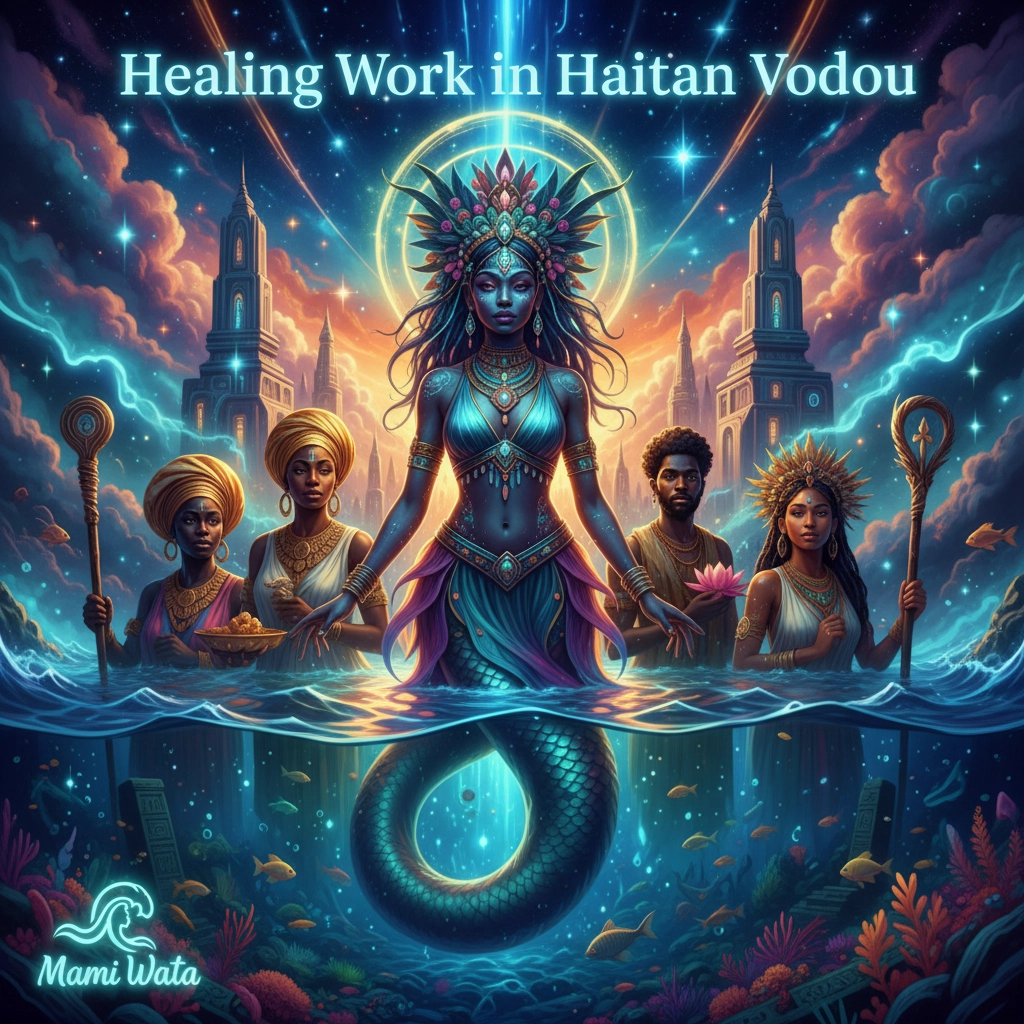
Let's get one thing straight right off the bat – Haitian Vodou healing isn't what Hollywood made you think it is. Forget the scary movie nonsense and tourist trap "voodoo dolls." We're talking about a sophisticated, community-based healing system that's been keeping people whole – body, mind, and spirit – for centuries.
Are you tired of surface-level spiritual content that doesn't give you the real deal? Good. Because today we're diving deep into authentic healing practices that have sustained entire communities through unimaginable hardships and continue to offer profound restoration today.
What Vodou Healing Actually Is
Here's what most people don't understand about Vodou healing: it's not about casting spells or working "magic" in some theatrical way. It's about restoring balance. Period.
In Vodou, illness, bad luck, relationship problems, financial struggles – all of these are seen as symptoms of spiritual imbalance. Think of it like this: when your car starts making weird noises, you don't just turn up the radio louder. You figure out what's wrong under the hood and fix it. That's exactly what Vodou healing does, except the "hood" is your spiritual life.
The healing work, called maji, operates on a simple but profound principle: everything is connected. Your physical health, your relationships, your finances, your family dynamics – they're all part of one interconnected web. When one part gets tangled, everything else feels it.

The Lwa: Your Spiritual Medical Team
Ready to meet the real powerhouses behind Vodou healing? The lwa are the spirits who do the heavy lifting in therapeutic work. But here's where it gets interesting – they're not distant, unreachable deities. They're active participants in your healing journey.
When you're dealing with health issues, relationship drama, or life falling apart, an oungan (male priest) or manbo (female priestess) doesn't just give you generic advice. They consult directly with the lwa through possession and divination to get to the root of what's really going on.
Picture this: you walk into a healing session thinking you need help with your chronic headaches, but the lwa reveal that your headaches are actually your ancestors trying to get your attention because you've been ignoring your spiritual obligations. Suddenly, you're not just treating symptoms – you're addressing the actual cause.
The lwa each have their specialties. Some are incredible for healing physical ailments, others excel at clearing emotional blockages, and some are your go-to spirits for protection work. It's like having access to a whole team of specialists who actually care about your wellbeing.
Herbal Medicine: Nature's Pharmacy Gets Spiritual
Now let's talk about something that'll blow your mind – the botanical knowledge in Vodou healing. We're not talking about some basic herb tea situation. Vodou practitioners maintain libraries of plant knowledge that would make modern pharmacists jealous.
But here's what sets it apart from your typical herbal medicine: respect and reciprocity. When a healer collects plants for medicine, they leave coins as payment. They're not just taking from nature – they're engaging in a relationship with it.

The plant work in Vodou includes:
-
Healing baths: Not your relaxing bubble bath situation. These are precisely prepared water treatments with specific plants chosen for their therapeutic properties. Each bath is customized for your particular healing needs.
-
Medicinal powders: Created for specific purposes like attracting good luck, providing protection, or clearing negative energy that might be affecting your health.
-
Wanga: Sacred objects infused with plant medicines and spiritual power for ongoing healing and protection.
Think about it – when's the last time you felt truly connected to the medicine you were taking? In Vodou healing, every plant, every preparation, every application is done with intention and spiritual connection.
Community Healing: You're Not In This Alone
Here's something beautiful about Vodou healing that modern healthcare completely misses: it's never just about you as an individual. Your healing affects your community, and your community's healing affects you.
Healing sessions happen in sacred spaces called badji, but they're not sterile, isolating environments. The community gathers. People drum, sing, dance, and hold space for healing to happen. When the lwa possess the healer to work on your behalf, everyone present is part of that healing energy.
Are you tired of feeling like you have to carry all your problems alone? This is where Vodou healing shows us a different way. Your healing journey becomes a community event, supported by both the living and the ancestral spirits.

Ritual Work and Sacred Spaces
Let's get practical about how healing actually happens in Vodou. The badji is where the magic happens – literally. This isn't some fancy temple with marble columns. It's a working space where real healing takes place.
During a healing ritual, the atmosphere shifts completely. The drumming starts, calling the lwa to come and assist. Songs fill the space, each one designed to invite specific spirits who can help with your particular situation. The dancing isn't performance – it's invitation, opening pathways for the lwa to enter and work.
When a lwa possesses the healer, you're no longer talking to a human intermediary. You're getting direct consultation with spiritual forces who can see what's really blocking your healing and exactly what needs to be done about it.
Integration with Modern Medicine
Here's something that might surprise you: authentic Vodou healers aren't anti-modern medicine. They're integrative. A good oungan or manbo will tell you to go see a doctor if that's what you need, and many healthcare providers in Haiti work alongside Vodou practitioners.
This became especially clear during HIV/AIDS prevention efforts, where Vodou officiants played crucial roles in public health campaigns. Why? Because they understood something that purely medical approaches missed – healing happens on multiple levels, and sustainable health requires addressing spiritual as well as physical needs.
You've got doktè fèy ("leaf doctors") who specialize in herbal remedies for specific conditions, working alongside conventional medical care. It's not either/or – it's both/and.

Every Ritual Is Healing Work
Want to understand something profound about Vodou? Every single ritual, no matter how small, is fundamentally a healing rite. Birthday celebrations, ancestor honoring, protection work, community gatherings – they're all forms of healing because they're all about maintaining or restoring balance.
This perspective flips the script on how we think about healing. Instead of waiting until something's wrong and then trying to fix it, Vodou healing is preventative and ongoing. It's like spiritual maintenance for your life.
Practical Healing Applications
So what does this look like in everyday life? Vodou healing addresses everything from:
- Physical ailments: Chronic pain, illnesses that doctors can't fully explain, recurring health issues
- Relationship problems: Family conflicts, romantic troubles, workplace drama
- Financial blocks: Career stagnation, money problems, business struggles
- Spiritual attacks: When someone's working against you spiritually
- Ancestral healing: Clearing family patterns that keep repeating across generations
The approach is always holistic. Your migraine might be treated with herbal medicine, ritual baths, spiritual protection work, and guidance about lifestyle changes that honor your spiritual needs.
Ready to understand healing in a completely new way? Vodou shows us that true healing isn't just about getting rid of symptoms – it's about coming back into right relationship with yourself, your community, your ancestors, and the spiritual forces that sustain life.
The healing work in Haitian Vodou offers something our modern world desperately needs: a comprehensive approach to wellbeing that treats you as a whole person embedded in relationships that matter. It's medicine for the body, therapy for the soul, and community support all rolled into one.
Your healing journey doesn't have to be a solo mission. The wisdom traditions are here, the community support is available, and the lwa are ready to work with you. The question is: are you ready to approach healing in a way that honors all aspects of who you are?
