

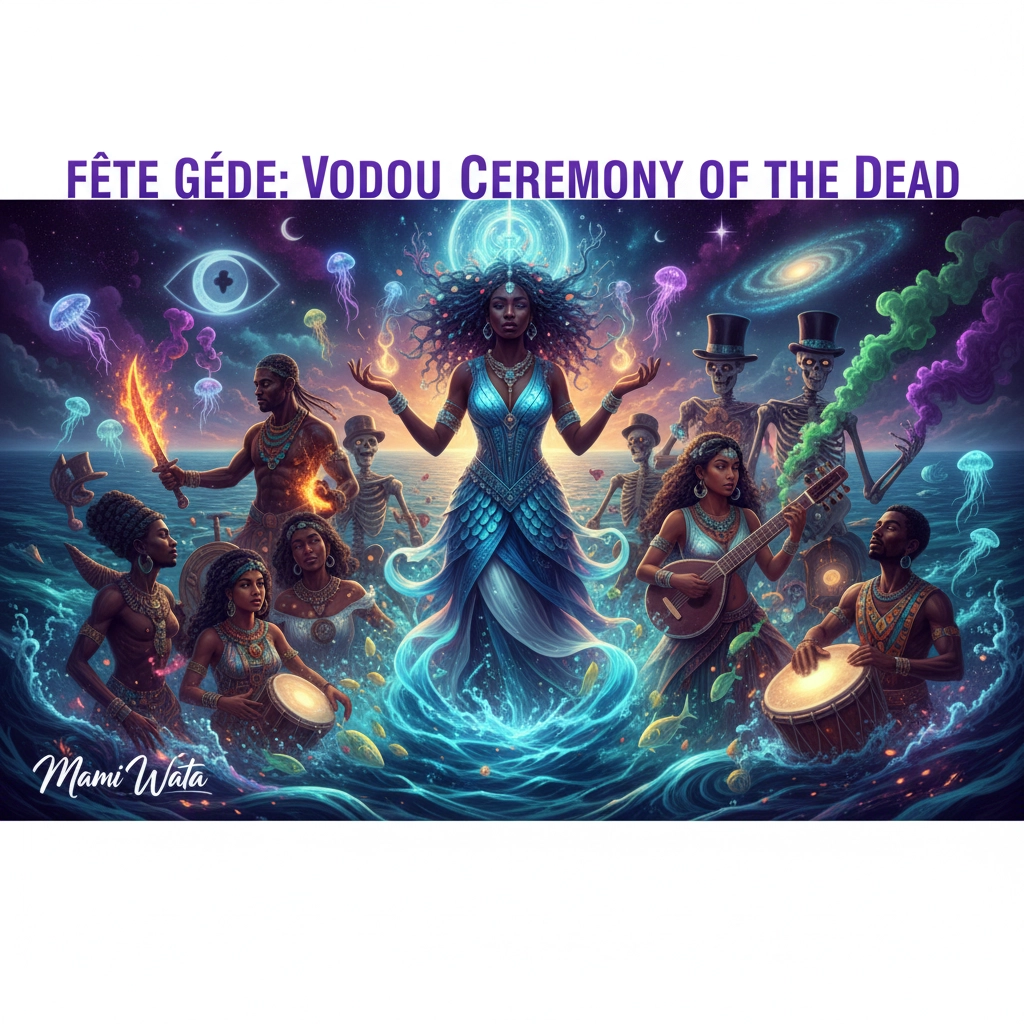
Ever wondered what happens when the veil between worlds gets thin enough to party through? Welcome to Fèt Gede, Haiti's most vibrant celebration of death: and trust me, it's nothing like what you're picturing.
While the rest of the world treats death with hushed tones and black clothes, Haiti throws the most epic spiritual block party you've ever seen. This isn't your typical Day of the Dead. This is where ancestor veneration meets Caribbean carnival, where spirits come to dance, and where death is celebrated as just another phase of existence.
The Spiritual Foundation: Meet Your Death Squad
Let's get one thing straight: the Gede aren't your typical grim reapers. These spirits are the ultimate intermediaries between the living and the dead, serving as cosmic doormen who help souls transition while keeping the living connected to their ancestors.
The Gede family includes some serious spiritual heavy-hitters. Baron Samedi, the dapper skeleton in the top hat, leads this crew with style. Papa Legba opens the crossroads between worlds, while Mama Brigit and Grann Brigitte bring their fierce feminine energy to guide souls safely home.
Here's what makes the Gede special: they embody the paradox of death and fertility, endings and beginnings. They're not here to scare you: they're here to remind you that death is just another dance in the cosmic rhythm.

Timing Is Everything: When the Ancestors Come to Party
Fèt Gede kicks off during the first few days of November, aligning with All Saints Day and All Souls Day. But this isn't just a weekend thing: the entire month of November pulses with Gede energy, creating extended opportunities for spiritual connection.
This timing isn't accidental. The syncretic nature of Haitian Vodou brilliantly weaves together Catholic holidays with African spiritual traditions, creating something entirely new and powerful. Your ancestors don't need permission to visit, but they sure appreciate an official invitation.
The main event happens at cemeteries, particularly the grand cemetery in Port-au-Prince, where thousands gather to celebrate. These aren't somber graveyards: they transform into sacred dance floors where the living and dead mingle freely.
The Ritual Elements: Building Bridges to the Other Side
Want to attract the Gede spirits? You've got to speak their language, and that language involves all your senses working overtime.
Altars become spiritual buffets, loaded with everything the Gede love: bottles of their favorite libations (rum and kleren are popular choices), baskets of sweet treats, musical instruments that call to their dancing hearts, perfumes, candles that light the way, and sometimes raw meat for the more demanding spirits. These altars aren't just pretty: they're functional spiritual technology.
Veves, those intricate ground drawings, serve as spiritual GPS coordinates. Each pattern is carefully traced to attract specific Gede spirits, creating visual invitations that say "party's here, ancestors welcome."
The real magic happens with polyrhythmic drumming that makes your heartbeat sync with ancestral frequencies. These aren't random beats: they're specific rhythmic calls that the Gede recognize and respond to. The drummers become spiritual DJs, spinning tracks that make the dead want to dance.

Spiritual Possession: When the Dead Drop In
Here's where things get intense: spiritual possession during Fèt Gede isn't subtle. When the Gede spirits mount their horses (that's Vodou speak for possessing someone), the entire energy shifts.
Possessed practitioners become living conduits for the Gede, and these spirits come with personality. They might use rough language, dance provocatively, or engage in behaviors that would shock your grandmother. But here's the thing: this isn't disrespectful. It's authentic spiritual expression that honors the Gede's wild, life-affirming nature.
These possessed individuals often lead processions through cemeteries, creating spectacular displays that blur the line between spiritual ceremony and performance art. They'll sprinkle themselves with rum and hot pepper infusions, embodying the Gede's love of sensation and intensity.
The Community Preparation: Honoring the Dead Properly
You can't just show up to Fèt Gede unprepared. The community spends weeks getting ready, and this preparation is spiritual work itself.
Cemeteries get deep cleaned, tombs are restored, and graves are decorated. This isn't just maintenance: it's an act of respect that shows the ancestors they're valued and remembered. Community members pool resources, share labor, and strengthen bonds while honoring their dead.
Participants dress in black and purple, the Gede's signature colors. This isn't funeral attire: it's spiritual uniform that signals your respect for the death mysteries and your readiness to engage with ancestral energy.

The Cultural Significance: More Than Just a Ceremony
Fèt Gede serves multiple functions that extend far beyond religious observance. It's cultural preservation in action, artistic expression unleashed, and community bonding intensified.
This ceremony integrates all the senses: the scents of offerings, the rhythms of drums, the vibrations of dancing bodies, the taste of ritual foods, the sight of elaborate altars. Your entire being becomes a receiving station for ancestral messages.
For the Haitian community, Fèt Gede represents resilience personified. Even hurricanes, earthquakes, and social upheaval can't stop this celebration. The only thing that might cancel it would be a hurricane hitting on the exact day, and even then, the spirits would probably dance in the storm.
Modern Adaptations: Keeping Traditions Alive
As Haitians have spread across the globe, Fèt Gede has adapted without losing its essence. In diaspora communities, suburban homes transform into ceremonial spaces, and cultural centers become temporary temples.
These adaptations prove the tradition's flexibility and strength. The core spiritual elements remain intact whether you're in Port-au-Prince or Brooklyn. The ancestors don't care about your zip code: they care about your intention and respect.
The Real Message: Celebrating Life Through Death
Here's what outsiders often miss about Fèt Gede: it's not about death as an ending. It's about death as a transformation, a continuation, a new way of existing that maintains connection with the living.
The Gede spirits embody this message through their joyful, irreverent energy. They're not mourning their deaths: they're celebrating their ongoing existence in a different form. They're showing us that the fear of death limits our ability to live fully.
This ceremony becomes a powerful reminder that your ancestors aren't gone: they're just operating from a different frequency. Fèt Gede teaches us to honor their memory while embracing our own vitality.
When you understand Fèt Gede, you understand that death isn't the enemy of life: it's life's dance partner. The Gede spirits are here to teach us that celebrating death means celebrating the continuation of consciousness, the persistence of love, and the eternal nature of spiritual connection.
Your ancestors are waiting for your recognition, your respect, and your willingness to dance with the mysteries of existence. Fèt Gede shows us how to honor them properly: with joy, with reverence, and with the understanding that the party never really ends( it just changes venues.)
