

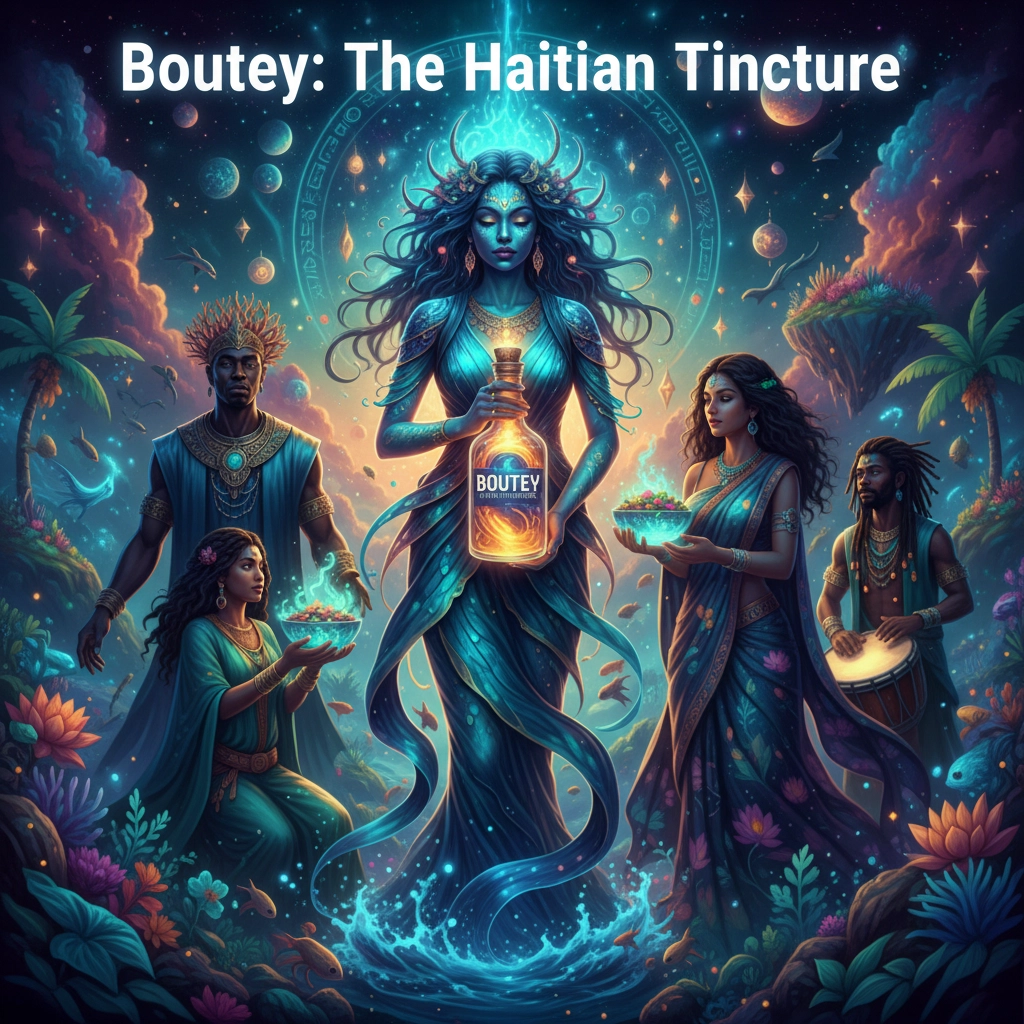
Let's clear something up right off the bat – if you came here thinking "boutey" is some kind of Haitian herbal tincture you can sip for wellness, you're not entirely wrong, but you're missing the bigger, more powerful picture. Boutey isn't your typical tincture at all. It's something far more sacred, far more complex, and honestly? Way more interesting than any health store remedy.
Are you ready to dive into one of Haiti's most misunderstood spiritual practices? Because we're about to talk about something that connects the living with the Lwa in ways that'll make you rethink everything you thought you knew about spiritual vessels.
What Boutey Really Means (And Why Everyone Gets It Wrong)
Here's where most people trip up: boutey is the Haitian Creole word for "bottle," but when we're talking about spiritual practice, we're referring to Boutey Lwa – sacred spirit bottles that serve as vessels for the Lwa (spirits) in Haitian Vodou ceremonies. These aren't medicinal tinctures you drink. They're holy containers that hold the essence, energy, and presence of spiritual beings.
Think of it this way – if your smartphone is a device that connects you to people across the world, a boutey is a device that connects you to spirits across the veil. Same concept, different technology. And just like you wouldn't use your phone as a paperweight, you don't treat a boutey like a regular bottle.

The confusion comes from the fact that Haiti does produce actual medicinal tinctures – they call those "teinture" in Haitian French. But boutey? That's pure spiritual technology, crafted with intention, blessed with purpose, and treated with the respect it deserves.
The Sacred Architecture of a Boutey Lwa
Every authentic Boutey Lwa is a masterpiece of spiritual engineering. These aren't mass-produced vessels you pick up at the corner store. Each one is handcrafted by practitioners who understand the sacred responsibility they're undertaking. We're talking about bottles adorned with rhinestones, pearls, ribbons, and spiritual symbols – each element chosen for its spiritual significance, not just its beauty.
But here's what most people don't understand: the decoration isn't just pretty wrapping. Those rhinestones catch and reflect light in ways that help focus spiritual energy. The pearls represent the waters that connect our world to the spirit realm. Every bead, every ribbon, every carefully placed ornament serves a purpose in creating a vessel worthy of housing divine energy.
The base of the bottle often contains sacred items – herbs, stones, oils, or other spiritually significant materials that correspond to the specific Lwa the boutey is intended to serve. This isn't random; it's deliberate spiritual architecture designed to create the right energetic environment for spiritual communication.
How Boutey Functions in Ritual Practice
When you see a boutey in action during a Vodou ceremony, you're witnessing something that bridges the physical and spiritual worlds. These vessels serve as focal points for ritual offerings and libations – liquid offerings poured with intention and reverence to honor and invoke the Lwa.
The practitioner doesn't just grab any liquid and pour it in. The choice of what goes into the boutey depends entirely on which Lwa is being honored. Ogou might receive rum, representing strength and fire. Erzulie might receive sweet liqueurs or perfumed waters, reflecting love and beauty. Each offering is chosen because it resonates with the specific energy signature of that spirit.
But here's where it gets really interesting – the boutey doesn't just contain these offerings. It transforms them. The sacred vessel, blessed and consecrated through ritual, becomes a conduit that elevates ordinary liquids into spiritual communication tools. The Lwa doesn't just receive the offering; they inhabit the space, using the boutey as a temporary dwelling place in our physical realm.

The Preparation Process: More Than Just Decoration
Creating a boutey isn't a craft project you tackle on a Sunday afternoon. This is sacred work that requires spiritual preparation, cultural knowledge, and deep respect for Haitian Vodou traditions. The process begins long before the first bead is glued in place.
First, the bottle itself must be cleansed – not just physically, but spiritually. This involves specific ritual baths, prayers, and sometimes periods of consecration that can last days or even weeks. The bottle needs to be emptied of any previous energy and prepared to receive sacred purpose.
Next comes the selection of decorative elements, but again, this isn't about picking pretty colors. Each element corresponds to specific spiritual properties. Red beads for Ogou's strength, blue for Erzulie Freda's grace, green for wealth and prosperity spirits. The practitioner must understand these correspondences deeply, because getting them wrong isn't just aesthetically off – it can actually interfere with the spiritual function of the boutey.
The actual construction process involves prayers, specific timing (often aligned with lunar phases or spiritual calendars), and multiple blessings. Many experienced practitioners will fast or undergo spiritual purification during this process, recognizing that they're creating something holy, not just decorative.
Different Types of Boutey for Different Purposes
Not all boutey serve the same function, and understanding these differences is crucial for anyone serious about respectful practice. Some boutey are designed for specific Lwa – Ogou boutey will look and feel entirely different from an Erzulie boutey, reflecting the distinct personalities and preferences of these spirits.
There are boutey designed for protection, others for love work, some for prosperity, and others for healing. The ingredients, colors, and decorative elements vary dramatically based on intended purpose. A protection boutey might contain iron filings, red cloth, and warrior imagery, while a love boutey could feature pink ribbons, rose petals, and heart-shaped decorations.
Some boutey are personal – created for an individual's spiritual practice and relationship with specific Lwa. Others are communal, designed to serve an entire spiritual community during ceremonies and rituals. The size, complexity, and contents reflect these different functions.
The Cultural Context You Cannot Ignore
Here's where we need to have an honest conversation about cultural respect and appropriation. Boutey aren't decorative objects you can DIY based on Pinterest tutorials. They're sacred vessels rooted in centuries of Haitian spiritual tradition, born from the resilience and spiritual innovation of enslaved Africans who preserved and transformed their ancestral practices under impossible circumstances.

When you see boutey in authentic practice, you're witnessing the continuation of spiritual traditions that survived the Middle Passage, slavery, colonization, and ongoing cultural suppression. These aren't exotic curiosities or aesthetic inspirations – they're living expressions of a people's spiritual sovereignty.
That means if you're not Haitian, if you haven't been properly initiated into Vodou practice, if you don't understand the cultural context and spiritual responsibilities involved, creating or using boutey isn't your lane. Period. This isn't gatekeeping – it's basic respect for sacred traditions that don't belong to everyone.
Boutey vs. Actual Haitian Tinctures: Know the Difference
Since we started with the misconception, let's circle back to clear things up completely. Haiti does produce incredible medicinal tinctures – "teinture" in Haitian French. These are traditional herbal preparations used for health and wellness, like the propolis tinctures that serve as natural antibiotics during seasonal changes.
These medicinal tinctures have their own rich tradition and cultural significance, but they operate in the realm of physical healing rather than spiritual communication. You drink a propolis tincture for your immune system. You offer libations through a boutey to connect with the Lwa. Different purposes, different practices, different levels of cultural sensitivity required.
Both deserve respect, but they're not interchangeable. Understanding this difference is crucial for anyone interested in Haitian spiritual and healing traditions.
The Deeper Spiritual Technology
What makes boutey so fascinating from a spiritual perspective is how they function as technology – spiritual technology that facilitates communication between realms. In many ways, they're similar to ritual tools found in spiritual traditions worldwide, but with distinctly Haitian innovations and cultural signatures.
The boutey serves as an anchor point, allowing Lwa to manifest more easily in our physical space. It provides them with a familiar, consecrated environment where they can receive offerings, communicate with practitioners, and extend their influence into the material world. For the practitioner, the boutey becomes a focal point for prayer, meditation, and spiritual work.
But here's what's really beautiful about boutey – they demonstrate how African diaspora spirituality transformed and innovated under pressure, creating new forms of spiritual technology while maintaining essential spiritual principles. The boutey represents cultural survival, spiritual creativity, and the unbreakable connection between the African diaspora and their ancestral spiritual practices.
Respecting the Tradition Moving Forward
If this exploration of boutey has sparked your interest in Haitian Vodou, that's wonderful – but channel that interest responsibly. Read books by Haitian authors, learn from legitimate practitioners, understand the history and context before you even think about engaging with the practices.
Boutey aren't Instagram props or spiritual accessories. They're sacred vessels created by people who've dedicated their lives to preserving and practicing these traditions. Approach them with the reverence they deserve, or don't approach them at all.
The beauty of boutey lies not just in their aesthetic appeal or spiritual function, but in what they represent – the unbreakable spirit of a people who transformed suffering into sacred practice, who created beauty from survival, and who continue to honor their ancestors through living spiritual traditions.
That's the real power of boutey – not as objects you can acquire, but as expressions of spiritual resilience you can learn from, respect, and honor through proper education and cultural appreciation.
