

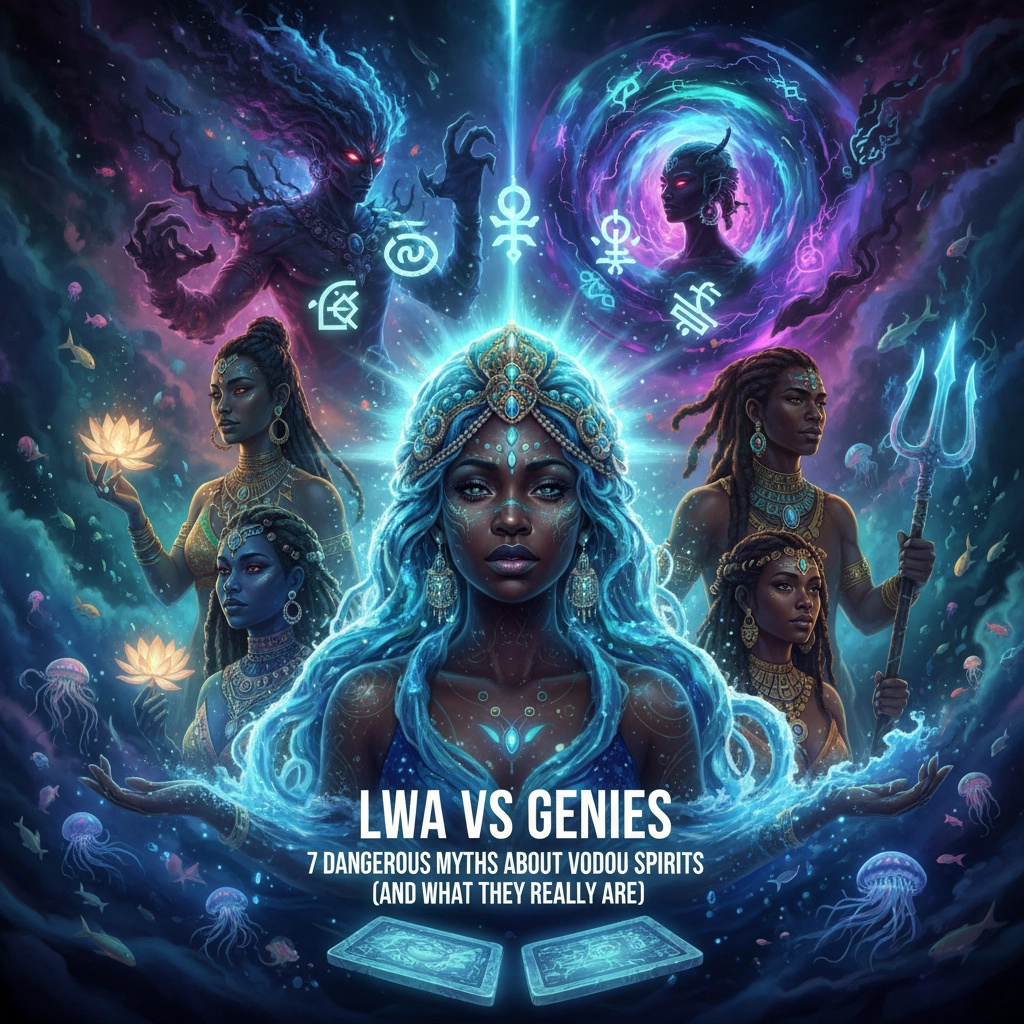
Are you tired of seeing Hollywood turn sacred Vodou spirits into cartoon genies? Ready to learn what lwa actually are instead of what Disney wants you to believe?
Let's be real: the internet is flooded with dangerous misconceptions about Vodou spirits that range from ignorant to downright disrespectful. These myths don't just spread misinformation; they actively harm the understanding of a beautiful, complex spiritual tradition that has survived centuries of colonization and persecution.
Today we're setting the record straight. No more confusion about whether lwa are "like genies" or some mystical wish-granting servants. Time to learn what Haitian Vodou practitioners actually know about these powerful spirits.
What Lwa Really Are (Spoiler: Not Your Disney Genie)
Before we demolish these myths, let's establish the truth. Lwa are spirits in Haitian Vodou and Dominican Vudú who serve as intermediaries between humanity and Bondye: the transcendent creator divinity. Think of them as divine ambassadors, not supernatural servants.
Over 1,000 lwa exist, with at least 232 documented names. These aren't random spirits floating around waiting to grant wishes. They're organized into spiritual families called nanchon (nations), with the two major groups being Rada (generally peaceful and benevolent) and Petwo (more forceful and aggressive, but still protective).
Each lwa has distinct personalities, specific colors, sacred objects, and domains of influence. They communicate through dreams, divination, and possession during ceremonies: where practitioners become the chwal (horse) of the lwa. This isn't Hollywood dramatics; it's sacred communion.

The 7 Most Dangerous Myths (And Why They Need to Die)
Myth #1: "Lwa Are Just Like Genies: They Grant Wishes"
Stop right there. This comparison is not just wrong; it's insulting to the depth of Vodou spirituality.
Genies in popular culture are bound servants who must fulfill wishes when summoned. Lwa are autonomous spiritual beings who choose to communicate with humans. They don't grant wishes: they provide spiritual guidance, healing, and protection through reciprocal relationships.
When you work with lwa, you give offerings (including sacrificed animals) in exchange for their wisdom and intervention. This is a sacred exchange between equals, not a master-servant dynamic. The lwa can refuse to help if they're displeased, and they often offer advice or admonishment rather than just solving your problems.
Myth #2: "All Vodou Spirits Are Evil Demons"
This colonial propaganda needs to end. Many lwa are actually equated with Catholic saints based on shared characteristics and symbols. They represent natural forces, ancestral wisdom, and divine guidance: not malevolent entities.
The demonization of lwa comes from centuries of Christian colonizers trying to suppress African spiritual practices. Don't fall for it. These spirits have helped communities survive slavery, poverty, and oppression. They're healers, protectors, and guides.
Myth #3: "Possession Is Just Psychological Hysteria"
Academic research has specifically debunked this misconception. Scholars who actually study Vodou have concluded that "those possessed by lwa are not psychotics who can be induced into such a state by the power of suggestion or healed through persuasion."
Possession is a sacred state where the lwa communicates directly through the practitioner's body. It's not mental illness or hysteria: it's a sophisticated spiritual technology that allows direct divine communication. The possessed person often has no memory of what occurred, indicating a genuine altered state of consciousness.

Myth #4: "All Lwa Are Dangerous and Aggressive"
This oversimplification ignores the complexity of lwa personalities. Rada lwa are generally peaceful and benevolent, though they can become vindictive if disrespected. Petwo lwa are more forceful but equally capable of protection and generosity.
Even spirits like Baron Samedi, who heads the Gede family associated with death, are greeted with joy because they bring merriment and celebration of life to ceremonies. The lwa aren't inherently dangerous: they're powerful beings who demand respect.
Myth #5: "Vodou Spirits Are Primitive or Backwards"
Are you kidding? The lwa system represents one of the most sophisticated theological frameworks on the planet. It emerged from the synthesis of West African religions with other influences, creating complex hierarchies, specific protocols, and deep philosophical underpinnings.
Each lwa has distinct domains: Legba guards crossroads and enables spirit communication, Agwe governs the sea, Ezili Freda oversees love, and Danbala Wèdo represents life's power and eternity. This isn't primitive: it's divinely organized.
Myth #6: "You Can Control Lwa Like Supernatural Servants"
Wrong again. The relationship with lwa is based on mutual respect and reciprocity. You don't control them; you develop relationships with them. They choose whether to work with you based on your intentions, offerings, and spiritual development.
Legba, the master of crossroads, must be honored first in any ceremony because "communication with the spirits is impossible" without his permission. This shows the lwa maintain their own spiritual hierarchy and decision-making power.

Myth #7: "Vodou Is About Gaining Supernatural Power Over Others"
This completely misses the point of authentic Vodou practice. The tradition focuses on spiritual balance, community healing, and maintaining proper relationships with divine forces. It's about harmony, not domination.
The Gede spirits, for example, bring joy and celebration to ceremonies. The practice emphasizes life celebration, ancestral connection, and community support: not individual power trips or harming others.
What You Actually Need to Know About Lwa
Ready for the real knowledge? Here's what Haitian Vodou practitioners understand about working with lwa:
Lwa Are Intermediaries, Not Servants
They bridge the gap between humanity and Bondye (God). You don't summon them like genies: you invite them into relationship through proper protocols, offerings, and respect.
Each Lwa Has Specific Domains
- Legba: Crossroads, communication, spiritual gatekeeper
- Danbala Wèdo & Ayida Wèdo: Life force, eternity (represented as serpents)
- Loko: Patron of temples and spiritual leaders
- Baron Samedi: Death, transformation, celebration of life
Some Lwa Exist "En Deux Eaux" (In Two Waters)
Certain spirits are served in both Rada and Petwo rituals, showing the fluid, adaptive nature of these spiritual relationships. This isn't rigid supernatural hierarchy: it's living, breathing spirituality.
Possession Is Sacred Communication
When lwa possess practitioners during ceremonies, they offer direct guidance, healing, and sometimes harsh truths the community needs to hear. This isn't entertainment; it's divine intervention.

Stop Disrespecting, Start Learning
Are you ready to approach Vodou with the respect it deserves? These lwa have guided communities through slavery, colonization, and ongoing oppression. They've provided healing, protection, and spiritual strength when everything else was stripped away.
The next time someone compares lwa to genies, correct them. The next time you see Hollywood's cartoonish portrayal of Vodou, remember what you've learned here. These spirits aren't magical servants: they're sacred intermediaries in a living religious tradition that continues to provide guidance and healing for millions worldwide.
Want to learn more about authentic African diasporic traditions? Check out our classes where we teach the real history and practice of these powerful spiritual systems.
The lwa aren't genies in bottles waiting to grant your wishes. They're divine beings who choose to work with those who approach them with proper respect, understanding, and reciprocity. Time to treat them: and the communities that preserved this knowledge( with the reverence they deserve.)
